It’s no secret that our homes are a safe space for many of us. While there is, of course, an exception to every rule, most people feel the most at ease when they are in their own space. Children are no different. As a matter of fact, they say if your child has the ability to let their guard down and push every single button you have, while being a complete angel for others, you’re doing it right.
This is because you’ve found the balance to make home feel safe for them, giving them a place where they can learn and grow without the outside world infringing. This foundational security is not a luxury but a profound necessity, forming the bedrock of their lifelong mental and emotional health.
The emotional safety we desire for our children is the ultimate goal. It is built intentionally upon a foundation of both physical security and emotional well-being. A child cannot truly exhale and be themselves in a place that feels vulnerable. Therefore, the journey to make home feel safe for your family begins by addressing both the tangible and intangible aspects of security.
This holistic approach, which actively nurtures their mind, body, and spirit, is crucial for their development. It requires thoughtful, layered, simple solutions that work together to create a robust sense of security for everyone, especially the youngest members.
It is essential to understand that emotional safety is just as critical as physical locks and alarms. While a security camera may watch the front door, a child’s heart needs to feel watched over with love and consistency. The peace of mind that comes from a strong deadbolt is mirrored by the comfort of a predictable routine. A secure window keeps the world out, but a quiet corner for reading lets a child’s mind expand safely within.
These layers of protection, physical barriers for their bodies and emotional anchors for their hearts, work in tandem to foster resilience and confidence.
Protecting against a home invasion is a priority, but so is guarding against the negative feeling of not being heard. A child’s sense of psychological security, the knowledge they are valued and respected, is as vital as the structural integrity of the door frames. To build a true sanctuary, you must intertwine the physical security measures that create your own safe space with the daily practices that nurture trust and openness. This dual focus is the best way to ensure your home is a safe place for learning, growing, and simply being.
Ultimately, by prioritizing their complete well-being…mental, emotional, and physical…you gift them the unwavering stability needed to explore the world from a core of strength and self-assurance.
Fortifying Your Family’s Perimeter: Confidence Starts at the Front Door
Your front door is the symbolic and physical gateway to your family’s world. Ensuring it is strong and reliable is a fundamental best way to prevent worry and protect against a home invasion in the first place. Start by inspecting door frames and upgrading door locks. A high-quality dead bolt is essential, and for extra security, consider a security door or different locks for a stronger level of protection.
It is a good idea to use long screws in strike plates to anchor deeply into the wall frame, making the door harder to force open. This is a simple fix that adds significant strength.
Windows and glass doors can feel like an easy target, both for you and for curious young children. For secure windows, window coverings provide privacy and safety. Installing locks or using metal poles in sliding door tracks is a great idea and a quick fix to prevent accidental openings or unauthorized entry. Do not forget less obvious access points like crawl spaces or basement windows. Securing them is a simple way to complete your safety circle.
Modern tools can extend your awareness and control, offering peace of mind even when you are busy. A smart doorbell lets you see who is at the door without interrupting playtime, while smart locks can eliminate the risky spare key hidden outside. Smart garage doors ensure the garage does not stay open unintentionally. It is also common sense to avoid posting real-time travel details on social media. Instead, a trusted neighbor or the police department can be a better point of contact during a long time away.
The Internal Safety Net: Systems for Peace of Mind
Once the perimeter is secure, internal systems protect your family from other threats and provide a baseline sense of calmness. An alarm system can be customized to chime when doors open, helping you keep track of little ones, while also alerting you to suspicious activity. Pair this with regularly tested smoke detectors and smoke alarms. Testing them monthly is a simple tip that ensures they are in good condition, giving you much time to get everyone out safely in an emergency. This is the best thing you can do for fire safety.
A truly healthy home environment guards against invisible dangers, too. Testing for radon gas, the second-leading cause of lung cancer, is a responsible step for long-term health. Good lighting in hallways, staircases, and play areas prevents falls and dispels childhood fears of the dark. For daily safety, keep medicines in their original containers and store them, along with cleaning supplies, completely out of reach.
Preparing an emergency supply kit for natural disasters with your children’s favorite snacks and comforts turns a scary concept into a manageable plan.
Cultivating Their Own Safe Space: Comfort and Calm
Physical safety sets the stage, but the emotional landscape is where your child’s own safe space truly blossoms. This involves creating a living space that feels predictably calm and reassuring. A clutter-free, organized home look reduces overstimulation and hazards. Designate a quiet corner with pillows and books. This can be a retreat after a bad day at school or a long day of activity.
Consider the sensory experience you create. A scented candle, used safely up high, or an essential oil diffuser can establish a sense of calmness. For sleep, a white noise machine can mask startling outside noises. Limiting blue light from screens before bed supports better rest for the whole family. In two-story houses, a medical safety device like a reliable baby monitor provides assurance. Even a low maintenance pet can be a tremendous source of comfort and companionship, teaching responsibility and unconditional love.
When Safety is Emotional: The Heart of the Home
A negative feeling of anxiety in your own home can stem from more than physical threats. For children, emotional safety means knowing they are heard and accepted. Fostering open communication is often the only way to ensure the home is a sanctuary. Sometimes, the best way to support your family’s emotional security is to seek guidance from mental health professionals. They can provide tools for managing big emotions and family stress.
Simple things weave the strongest safety net. A consistent family dinner, a calming bedtime routine, or a designated bowl for house keys and car keys, and that garage door opener to stop the morning scramble, these rituals build a predictable, secure world. For older children, knowing how to operate door locks and whom to call in an emergency empowers them and strengthens the family’s overall safety plan.
The Balanced Family Haven
In the end, making a home safe for your children is an act of balanced love. It is the solid click of a dead bolt at night, the reassuring glow of a security camera light, and the routine beep of a smoke detector test. But it is equally found in the simple ways you nurture their living space. This includes the good lighting that banishes bedroom monsters, the sense of calmness in their quiet corner, and the unconditional hug that mends a bad day.
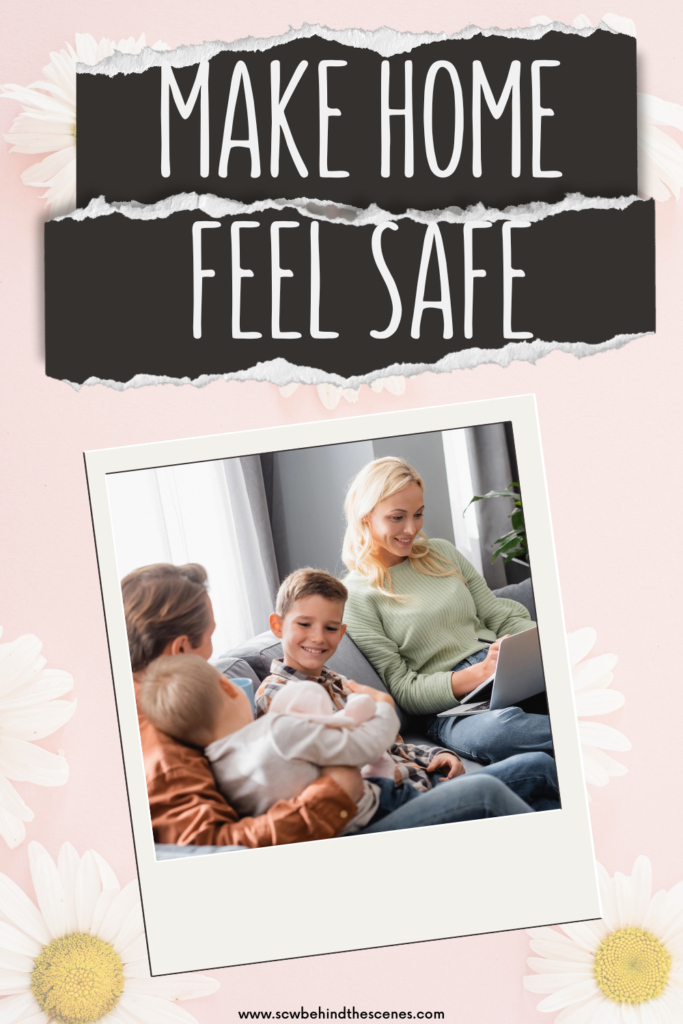
By integrating practical security measures with deliberate emotional care, you build more than a secure house. You create the only sense of safety that truly matters to a child. This is the deep, unwavering knowledge that within these walls, they are profoundly protected, utterly loved, and free to be themselves. This holistic approach is, without question, the good way, the best way, and the only way to build a sanctuary. It stands strong against the outside world and nourishes your family’s growth from the inside out.
Getting Started and Make Home Feel Safe
As we navigate this world together, remember that the first step toward building your child’s resilience is reinforcing their own safe space. To help you begin these essential, peaceful conversations, I invite you to download my free guide, “5 Prompts to Help Kids Feel Safe.” These gentle, ready-to-use prompts are designed to calm their hearts…and yours.
They will help you talk with your kids when headlines feel scary, offering simple ways to listen first, reassure with honesty, and create those small moments of calm that build a lasting sense of security.
These simple things remind them that your own home is a safe place, a steadfast living space, no matter what’s happening outside.
Sign up today for your free one-page PDF. It’s a great idea and a simple tip to strengthen your family’s foundation. Let’s take this first, good way toward hope, together.